Bipartisan legislation introduced in House to reauthorize stem cell research programs
Rep. Chris Smith introduced legislation to reauthorize stem cell research and therapy programs, which he said can “turn medical waste … into medical miracles.”

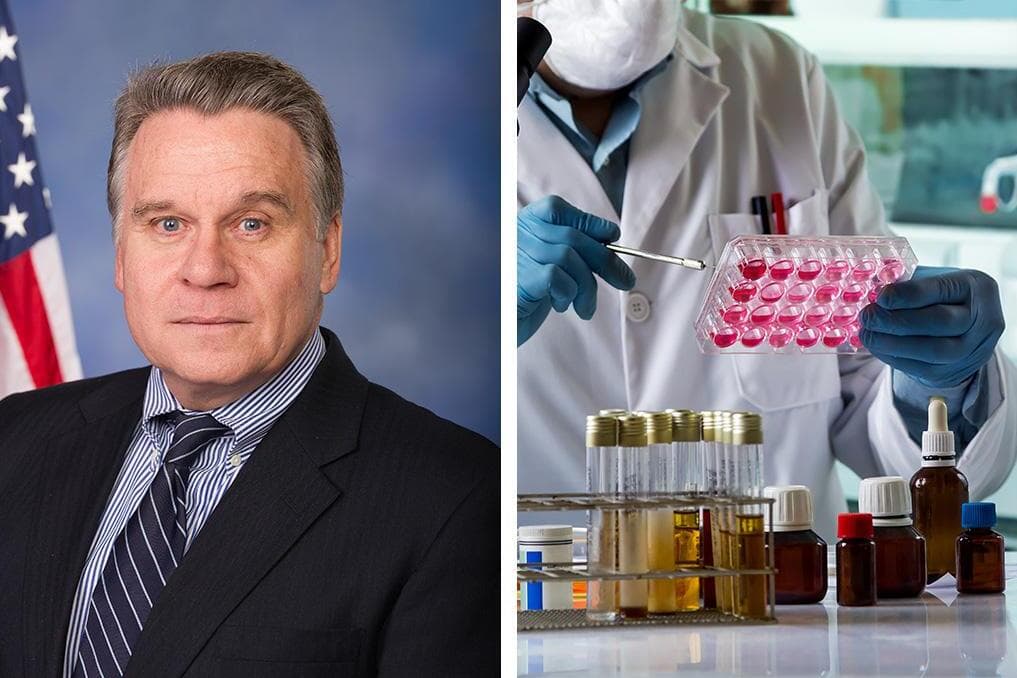
Rep. Chris Smith, R-N.J., recently introduced bipartisan legislation aimed at reauthorizing two stem cell research and therapy programs, which he said can “turn medical waste … into medical miracles.”
In a press release, Smith stated that the legislation, the Stem Cell Therapeutic and Research Reauthorization Act of 2025 (HR 5160), will revitalize the National Marrow Donor Program and the National Cord Blood Inventory. He introduced the bill Sept. 4 in the House of Representatives and hopes to allocate to the programs $165 million and $115 million, respectively, over a five-year period.
The release highlighted the two programs’ impact on American health care.
“Since its inception, the National Cord Blood Inventory has cumulatively banked more than 122,500 cord blood units to be tapped for life-saving treatments,” the release states, “and the National Marrow Donor Program has saved more than 140,000 lives through cell therapy.”
Smith added that the programs use medical waste, such as afterbirth, to create “life-saving and life-enhancing treatments that can help to mitigate and potentially cure more than 75 diseases, including leukemia, lymphoma and sickle cell anemia.”
The bill builds on the Stem Cell Therapeutic and Research Reauthorization Act of 2005, legislation that Smith had sponsored at the time.
Other lawmakers have offered their support for the legislation, including Reps. Doris Matsui, D-Calif., and Kweisi Mfume, D-Md. Physicians affiliated with the two stem cell programs also praised the bill.
Matsui said the bill is “especially meaningful” to her because her late husband had been diagnosed with bone marrow failure.
“And at that time, there was no hope of getting a bone marrow transplant,” she said in the release. “That’s why I’m really happy that we introduced the Stem Cell Therapeutic and Research Reauthorization Act — to not only keep these programs going strong, but to make sure that no patient has to hear what my husband and I heard: that there are no options.”