Celebrating the Nativity of the Blessed Mother
The Church celebrates the Blessed Mother’s birthday on Sept. 8, nine months after the Solemnity celebrating her Immaculate Conception Dec. 8.

The Church celebrates the Blessed Mother’s birthday on Sept. 8, nine months after the Solemnity celebrating her Immaculate Conception Dec. 8.
Franciscan Media states that the tradition of celebrating Mary’s birthday dates back to at least the sixth century. According to Francisan Media, Scripture does not provide details on the birth of Mary; instead, the tradition dates back to an apocryphal and non-canonical work, the Protoevangelium of James.
“This work has no historical value, but it does reflect the development of Christian piety,” Franciscan Media notes. “According to this account, Anna and Joachim are infertile but pray for a child. They receive the promise of a child who will advance God’s plan of salvation for the world.”
The Church only commemorates three birthdays in its liturgical calendar: the Nativities of John the Baptist, the Blessed Mother, and, of course, of Christ Himself. An article from Catholic Answers explains that as most infants are born with the stain of original sin, the Church does not liturgically celebrate their birthdays, but rather the day of their death, when they are born into eternal life. However, the Blessed Mother and Christ were both born without original sin. Though not official Church teaching, many theologians argue that John the Baptist was sanctified in the womb when he leapt with joy to greet Jesus.
“St. Augustine and St. Thomas clarified the sense of [John the Baptist’s] liberation carefully,” Catholic Answers states. “Such an exceptional grace is for an exceptional mission, and it implies complete freedom not only from deliberate sin, but from any disordered feelings that contradict reason and faith. Thus it is that Holy Church practices a devotion to the holy infancy of Christ, and of Mary, and of John the Baptist. They were truly saints from their mothers’ wombs.”
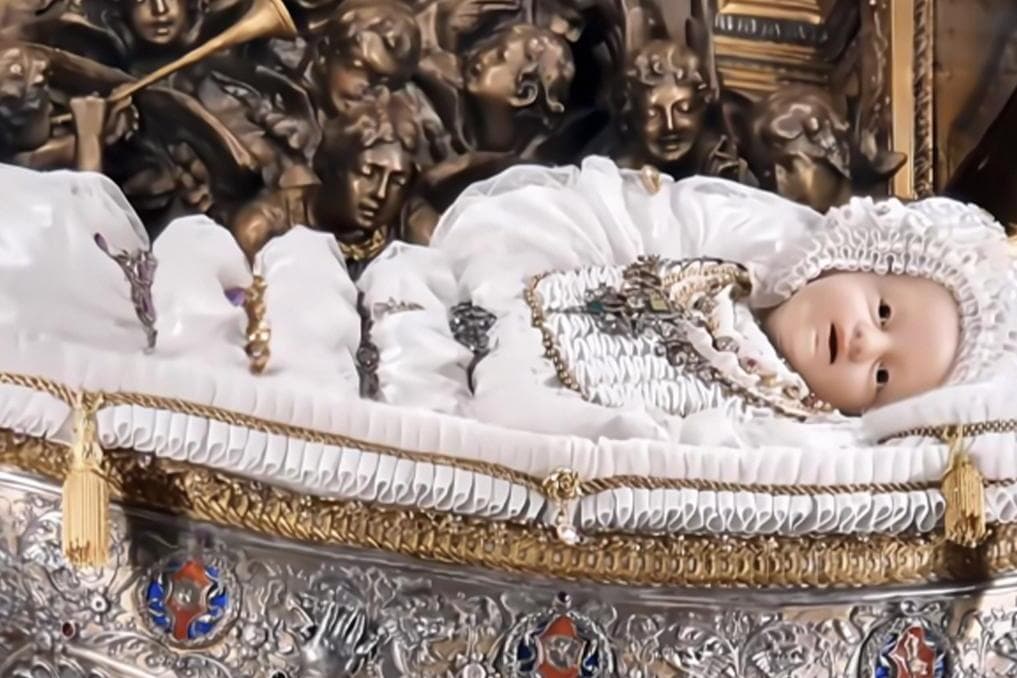
Devotion to the Blessed Mother as a child, or “Maria Bambina,” is common in Mexico, Poland, and Italy. Sister Isabella Chiara Fornari, the superior of the Poor Clare Sisters in Todi, Italy, created a famous waxen statue of Maria Bambina in 1735. Miracles have been attributed to the statue, and the religious sisters who currently safeguard the statue, the Sisters of Charity in Rome, are affectionately known as the “Baby Mary Sisters.”