Ohio pastor critiques Amy Coney Barrett's memoir as ‘sanitized of dogma’
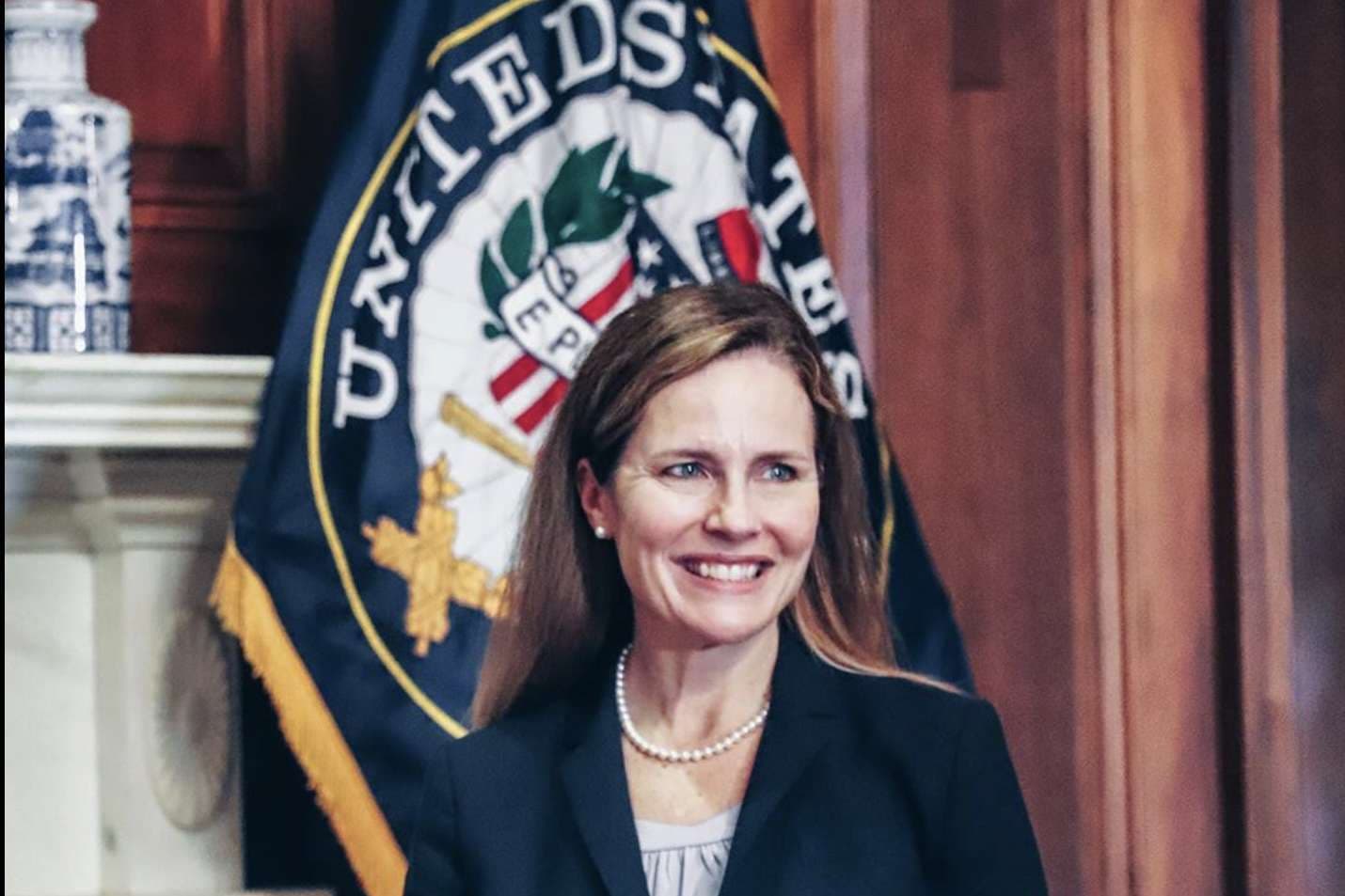
A pastor in Ohio is questioning what he sees as a conspicuous absence of religious belief in a new book by U.S. Supreme Court Justice Amy Coney Barrett, arguing that the justice’s memoir and legal reflections are “sanitized of dogma” despite her public identity as a Catholic.
Monsignor Richard Antall, pastor of Holy Name Parish in the Diocese of Cleveland, lays out his critique in a Dec. 16 editorial for Angelus News, writing that Barrett’s new book, Listening to the Law: Reflections on the Court and Constitution, downplays the role of faith in favor of broader cultural and political acceptance.
Msgr. Antall acknowledges the book’s strengths, calling it “in many ways a clever book” and praising it as “partly a very good introduction to constitutional law and history, and also part celebrity memoir.” He notes Barrett’s anecdotes about her great-grandmother’s home, her grandparents’ courtship, her father’s advice about emotional restraint, and the “hectic quality of life with seven children in the home (including two adopted from Haiti).”
But as a pastor, Msgr. Antall says what stands out most is what is missing.
“What we don’t hear about is the Justice’s Catholic faith,” he writes.
Aside from a brief mention that Barrett took her oath of office on a Bible she has used since second grade and a passing joke about the word “bachelor” not applying to Catholic priests, Msgr. Antall says the book offers “no other reference to the Bible” and “nothing about the faith life of her family.”
“There is nothing about turning to God for strength when tested by circumstances like the prejudice her nominations met,” he continues. “Nothing about prayerful discernment in making big decisions for the family. No worry about the integrity of her faith serving in government.”
Msgr. Antall contrasts that absence with Barrett’s willingness to reference popular culture, noting allusions to Harry Potter and television shows such as “Portlandia” and “Friday Night Lights.” “Couldn’t she squeeze Jesus in there somewhere?” he asks.
The pastor repeatedly returns to Barrett’s confirmation hearings, which he describes as “a watershed of progressive bigotry against Catholicism.”
He writes that the 2017 and 2020 hearings exposed “a notable lack of confidence in Catholics from the country’s elites” and faults Barrett for declining to confront that reality.
While Barrett briefly recounts the strain of the hearings in her book — writing that the 2017 session “was much more aggressive than I anticipated” and that she left the room “a little shell-shocked” — Msgr. Antall argues that she sidesteps a deeper reckoning with what those moments revealed about attitudes toward Catholicism in public life. He points in particular to a remark from Sen. Dianne Feinstein, D-Calif. during the 2017 hearing, “The dogma lives loudly in you,” which became a flashpoint in debates over religion and public office.
Instead, he writes, Listening to the Law “paints a cozy, if not rosy, picture of the atmosphere of respect and the good relations between the justices,” adding that it can feel like “whistling past the graveyard.” He also faults the book for omitting discussion of recent controversies, including the 2022 leak of the Dobbs v. Jackson Women’s Health Organization decision, which overturned the 1973 Roe v. Wade ruling and ended federally legalized abortion, returning primary authority over abortion policy to the states.
Msgr. Antall ultimately concludes that Barrett is writing with a particular audience in mind, namely, a secular one. In his view, the result is a book that is “both brilliant and coy,” crafted as “a brief for acceptance across a broad range of society.”
“One thing Feinstein might like about ‘Listening to the Law,’ however,” Msgr. Antall adds, “is that it is sanitized of dogma.”
Msgr. Antall, however, frames his critique as a matter of expectation.
“As a pastor,” he writes, “I think that if a member of my parish stepped out to such prominence and wrote a memoir, I would expect something more about belief.”