On the intercession of Our Lady Queen of Peace
On the intercession of Our Lady Queen of Peace

In a world so wrought with conflict, the temptation to think there is no hope, no possibility of resolution, and no way forward can feel almost crushing. But in these moments, the Church encourages individuals to turn to a strength that not only can lift them out of this temptation but also draw enemies to solution and reconciliation, save societies from collapse, and offer healing: Christ Jesus, especially through the intercession of His Blessed Mother, Our Lady Queen of Peace.
Pope Leo XIV asked Catholics to pray the Rosary daily in October, a month that the Church dedicates to Our Lady, for the intention of peace.
On Oct. 8, President Donald Trump announced one of the most significant breakthroughs toward ending the Israel-Hamas conflict. Both Israel and Hamas agreed to the first phase of a peace plan that aims at ending the violence in Gaza and returning the hostages and prisoners.
The Latin Patriarch of Jerusalem, Cardinal Pierbattista Pizzaballa, reacted to this news with joy, and he also observed that the road ahead remains long. As such the Patriarchate reiterated Pope Leo’s call to observe Oct. 11 as a day of prayer and fasting for peace.
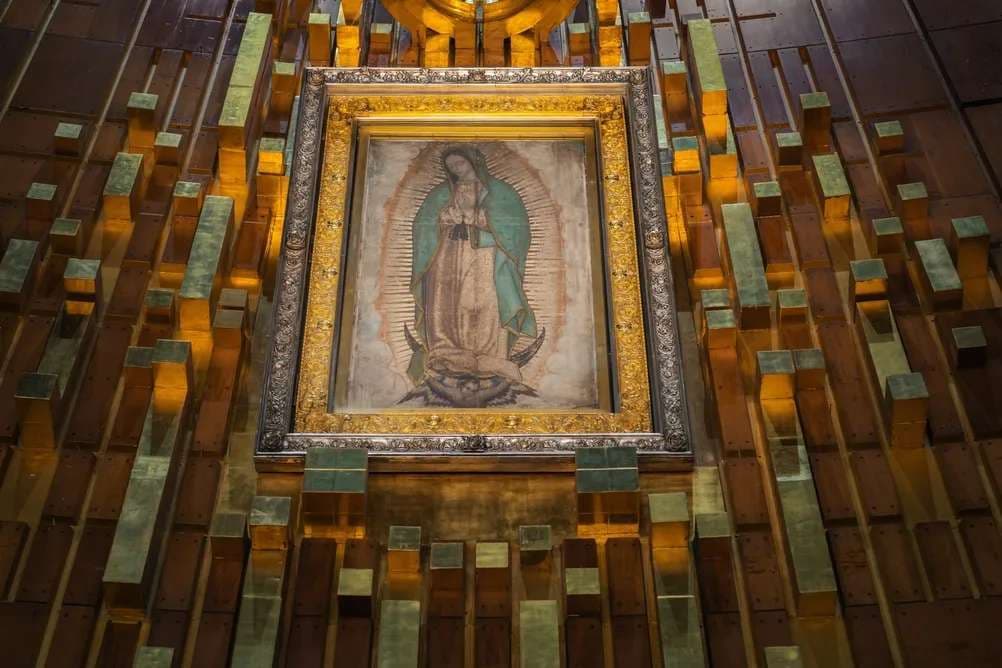
Turning to the intercession of Our Lady has biblical roots in the wedding feast at Cana, and her concern for and attentiveness to humanity throughout the centuries since has been reassured in a number of apparitions and Church documents. For example, Our Lady of Guadalupe told St. Juan Diego, when he was experiencing a moment of deep distress:
“Am I not here, I who am your Mother?”
Her maternal concern and care extends to all people. Pope St. John Paul II said in a 1998 General Audience that when Christ told St. John from the cross, “Behold your mother,” His words were addressed to “all of us.”
The Gospel also relates how Christ’s Blessed Mother stood at the foot of her Son’s cross. Reflecting on this and her motherhood, Pope St. John Paul II said: “She thus united herself to all the sufferings that Jesus endured. She shared in the generous offering of his sacrifice for the salvation of mankind. This association with Christ’s sacrifice brought about a new motherhood in Mary.”
“She who suffered for all men became the mother of all men,” he said. “Jesus himself proclaimed this new motherhood when he said to her from the height of the cross: ‘Woman, behold, your son.’”
Thus the Church entrusts with confidence many intentions to the intercession of the Blessed Mother — including requests that, to some, may seem impossible, such as prayers for peace in a world faced with conflicts that may seem insurmountable.
But for Christ Jesus, the Prince of Peace, especially through the intercession of His mother, the Queen of Peace, they are not.
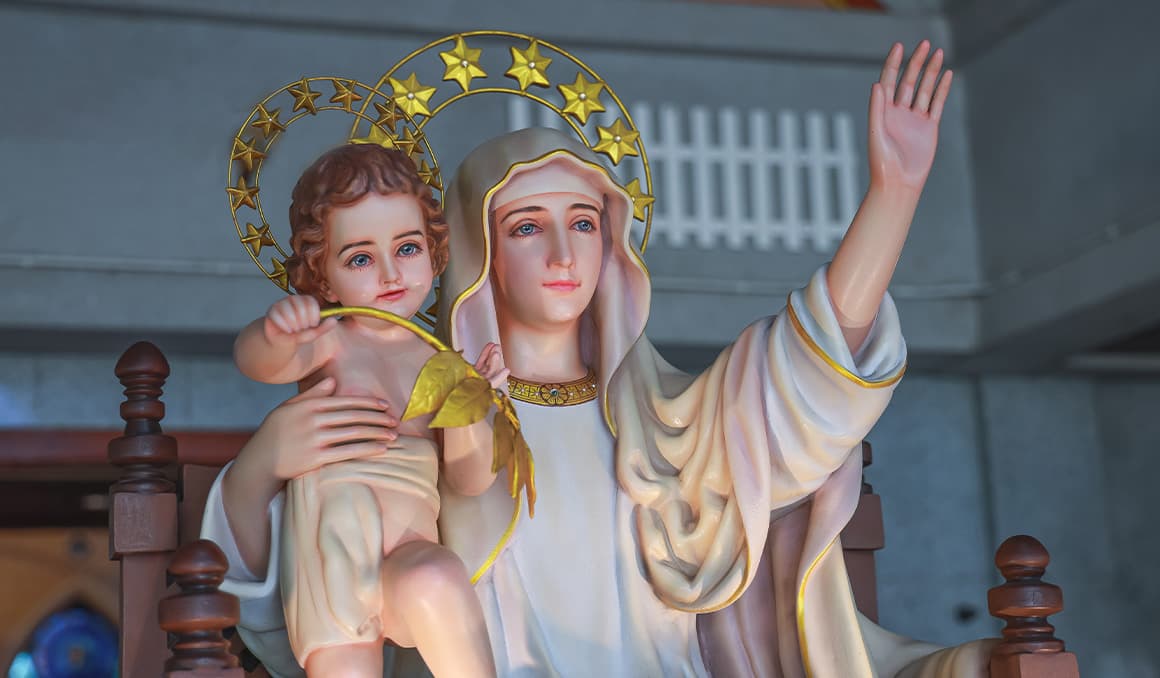
This particular Marian title has 16th-century roots, according to New Jersey-based Our Lady Queen of Peace Church. On the wedding day of Jean de Joyeuse and Françoise e Voisins, de Joyeuse presented his bride with a statue of Our Lady in which she is holding an olive branch in her right hand, and her Son, the Prince of Peace, is seated in her left arm.
This statue, according to the church, became a family heirloom eventually inherited by de Joyeuse’s grandson, who joined the Capuchin order in France.
The statue stayed with the Capuchins in Paris for the next 200 years and eventually was renamed Notre Dame de Paix — Our Lady of Peace, according to the church.
In 1657, the statue was blessed and enthroned in a new chapel for the Capuchins on July 9, the state that Pope Alexander VII eventually declared was the Capuchins’ feast of Our Lady of Peace.
In 1906, the Archbishop of Paris ceremonially crowned the statue, thus formally introducing the title “Our Lady, Queen of Peace,” according to the church.
When World War I broke out, Pope Benedict XV added this new title to the Litany of Loreto. The church also relates that after the end of World War II, celebrations around Sept. 2 for the “Queen of Peace” became popular, mostly in Europe.
As entire countries search for peace, and prayers for widespread peace continue through the years, it remains no less important for individuals to strive for peace first in their own hearts, families, relationships, and homes. The Blessed Virgin Mary offers a profound model for how to cultivate this and live it out even amid the suffering of life.
A novena to Our Lady Queen of Peace is available here.