Pope Leo: Nothing more human and divine than to say, 'I need'
During his Wednesday General Audience, Pope Leo XIV reflected on one of the most poignant moments of Christ’s Passion, drawing a direct line between the Lord’s cry on the cross and the human condition: the need to ask for love, communion, and help.
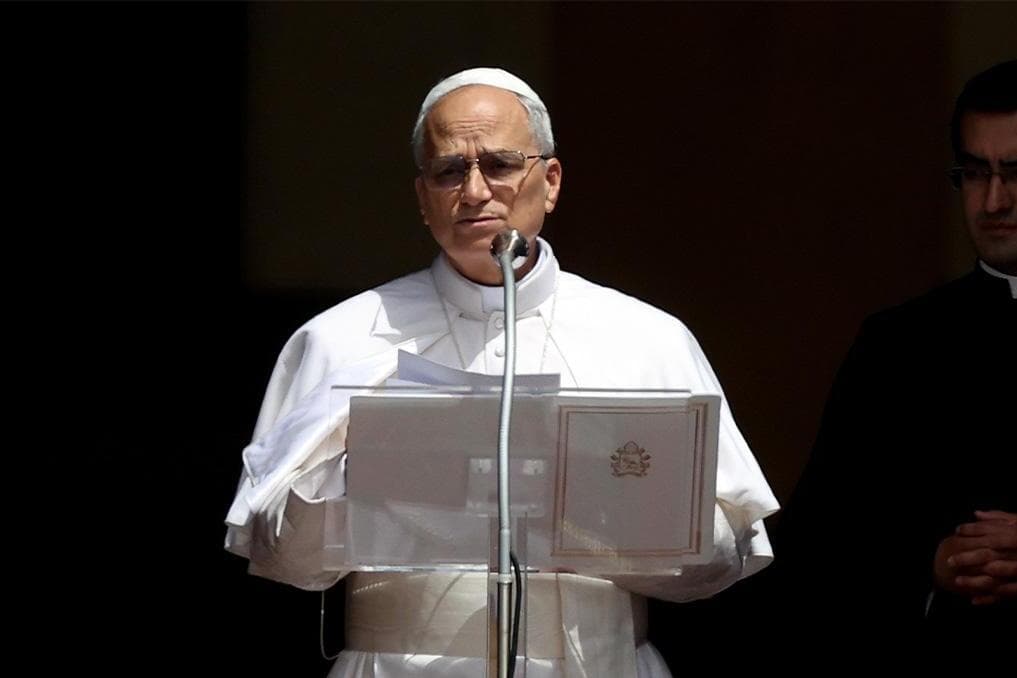
During his Wednesday General Audience, Pope Leo XIV reflected on one of the most poignant moments of Christ’s Passion, drawing a direct line between the Lord’s cry on the cross and the human condition: the need to ask for love, communion, and help.
The Pope continued his cycle of catecheses on the Jubilee of Hope, focusing this week on Jesus’ words from the cross: “I thirst” (Jn 19:28). He said these final expressions are not merely the cry of a suffering body but reveal the entire mystery of Christ’s life and mission.
“On the cross, Jesus does not appear as a victorious hero, but as a supplicant for love,” Pope Leo explained. “He does not proclaim, condemn or defend himself. He humbly asks for what he, alone, cannot give to himself in any way.”
The Holy Father emphasized that Jesus’ thirst is more than a physiological need.
“It is also, and above all, the expression of a profound desire: that of love, of relationship, of communion,” he said. By sharing even this vulnerability, the Son of God teaches that love “must also learn to ask and not only to give.”
"I thirst, says Jesus, and in this way he manifests his humanity and also ours. None of us can be self-sufficient. No-one can save themselves,” Pope Leo continued. “Life is ‘fulfilled’ not when we are strong, but when we learn how to receive.”
The Pope then described what he called “the Christian paradox”: Salvation is revealed not in demonstrations of power but in weakness accepted and offered in love.
“God saves not by doing, but by letting himself do,” he said. “Not by defeating evil with force, but by accepting the weakness of love to the very end.” In that same moment of receiving sour wine from the soldiers, Christ declared, “It is finished” (Jn 19:30), showing that “love has made itself needy, and precisely for this reason it has accomplished its work.”
For Pope Leo, Jesus’ thirst carries a radical invitation to modern men and women. In a society that prizes self-sufficiency and performance, he said, the Gospel shows something different: “The measure of our humanity is not given by what we can achieve, but by our ability to let ourselves be loved and, when necessary, even helped.”
Far from being humiliating, asking is liberating.
“Jesus saves us by showing us that asking is not unworthy, but liberating,” the Pope said. “It is the way out of the hiddenness of sin, so as to re-enter the space of communion.”
Pope Leo also stressed that thirst is a sign of authenticity, not failure: “If even the Son of God chose not to be self-sufficient, then our thirst too — for love, for meaning, for justice — is a sign not of failure, but of truth."
He urged the faithful to see in their fragility a path to God: “If we have the courage to acknowledge it, we can discover that even our fragility is a bridge towards heaven. It is precisely in asking — not in possessing — that a way of freedom opens up.”
Bringing his catechesis to a close, Pope Leo invited all believers to embrace the humility of need, echoing Christ’s cry from the cross.
“Dear brothers and sisters, in Christ’s thirst we can recognize all of our own thirst. And to learn that there is nothing more human, nothing more divine, than being able to say: I need.”