Rubio pushes Iran to negotiate as Strait of Hormuz clashes strain ceasefire
Secretary of State Marco Rubio told Iran May 5 that the country faces a choice between negotiating a peace deal with the U.S. or suffering economic collapse and "total defeat.”

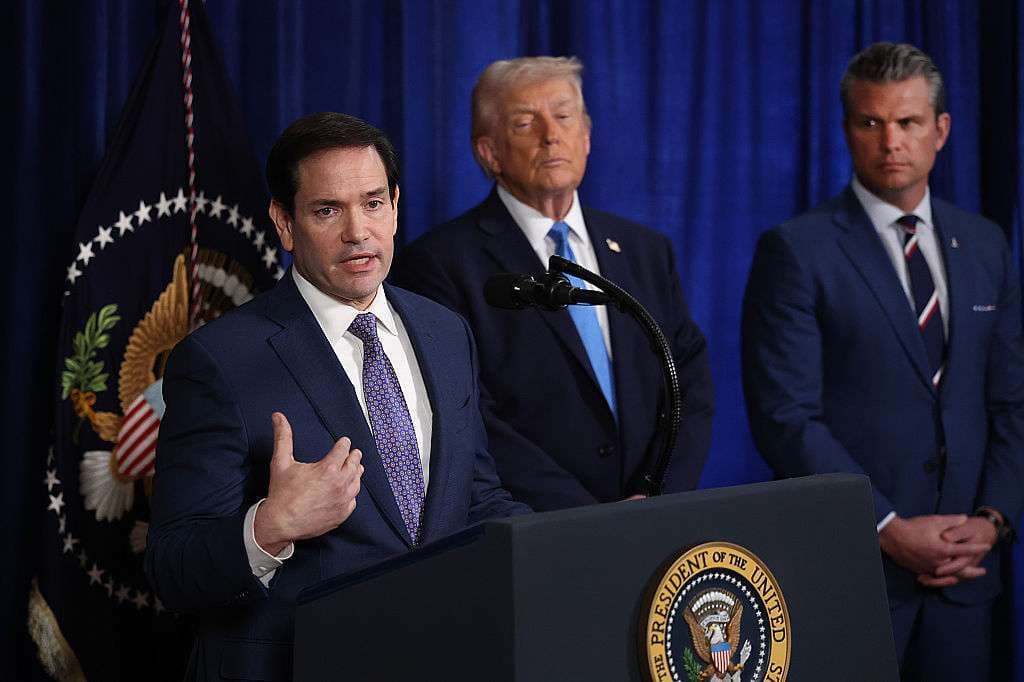
Secretary of State Marco Rubio told Iran May 5 that the country faces a choice between negotiating a peace deal with the U.S. or suffering economic collapse and "total defeat.”
The remarks came at a White House press briefing that announced the conclusion of Operation Epic Fury. With the combat phase over, Rubio said, the administration is now pressing for a negotiated settlement from Iran.
"The President, our President, has proven time and again that his preference is peace," Rubio said. "But Iran must accept the reality of the situation and come to the negotiation table and accept terms that are good for them, but ultimately good for the world."
He said senior U.S. envoys Jared Kushner and Steve Witkoff are actively pursuing a diplomatic opening.
"If there is one there, it could be one that leads them to reconstruct to prosperity, and to stability, and to not posing a threat to the world," Rubio said. "The alternative is growing isolation, economic collapse, and, ultimately, total defeat."
Rubio also warned Iranian leadership not to underestimate President Donald Trump's resolve.
"If they test him, ultimately, they will lose," the secretary said. "The hard way, the easy way, the long way, the short way, they will lose."
Operation Epic Fury
Rubio detailed Operation Epic Fury's military results, claiming Iran has now lost the deterrent power it had spent years building.
"Iran's plan was to build this conventional shield with thousands of missiles so they couldn't be attacked," he said. "They no longer have that shield because of our successful operation. They have no navy left. They have no air force left."
With Iran’s conventional deterrent weakened, Rubio argued that preventing the nation from gaining nuclear weapons had become the administration’s top concern. He warned that a nuclear weapon would give Tehran unchecked control over the Strait of Hormuz, one of the world's most critical shipping lanes.
“Look at what they’re doing with the straits right now. They’re holding the whole world hostage,” he said. "If Iran had a nuclear weapon, they'd close the strait and say, 'What are you going to do about it? We have a nuclear weapon. We can attack you with it.’ That's the world none of us want to leave behind. That won't happen under President Trump's watch.
Further, Rubio stated that although Iran denies seeking a nuclear weapon, it is still “doing all the things you would do if you wanted a nuclear weapons program.”
Iran accuses U.S. of violating the ceasefire
As Zeale News reported, Iranian forces opened fire on U.S. warships in the strait May 4, prompting American forces to sink multiple Iranian vessels in retaliation after Trump's announcement of “Project Freedom.”
"There is no 'international law' that allows you to say, 'I'm going to put mines in an international body of water and I'm going to blow up ships that don't listen to us,'" Rubio said. "That's what Iran is doing."
He called on the United Nations to condemn Iran's actions and urged the international community to increase pressure on Tehran.
"If they don't stop, the world should be diplomatically and economically isolating them," Rubio said.
He insisted the American military presence in the region is not aggressive.
"This is not an offensive operation. This is a defensive operation, and what that means is very simple: There's no shooting unless we're shot at first," he said. "We're not attacking them, but if they're attacking us or they're attacking a ship, you need to respond to that."
The same day, Mohammad-Bagher Ghalibaf, speaker of the parliament of Iran, accused the U.S. on X of violating the ceasefire through Project Freedom. Ghalibaf said the security of the strait has been “jeopardized by the United States and its allies through the violation of the ceasefire and the imposition of a blockade; of course, their evil will diminish.”
“We know full well that the continuation of the status quo is intolerable for America,” he wrote, “while we have not even begun yet.”
Trump posted on Truth Social later the same day that Project Freedom will be temporarily paused while negotiations proceed.