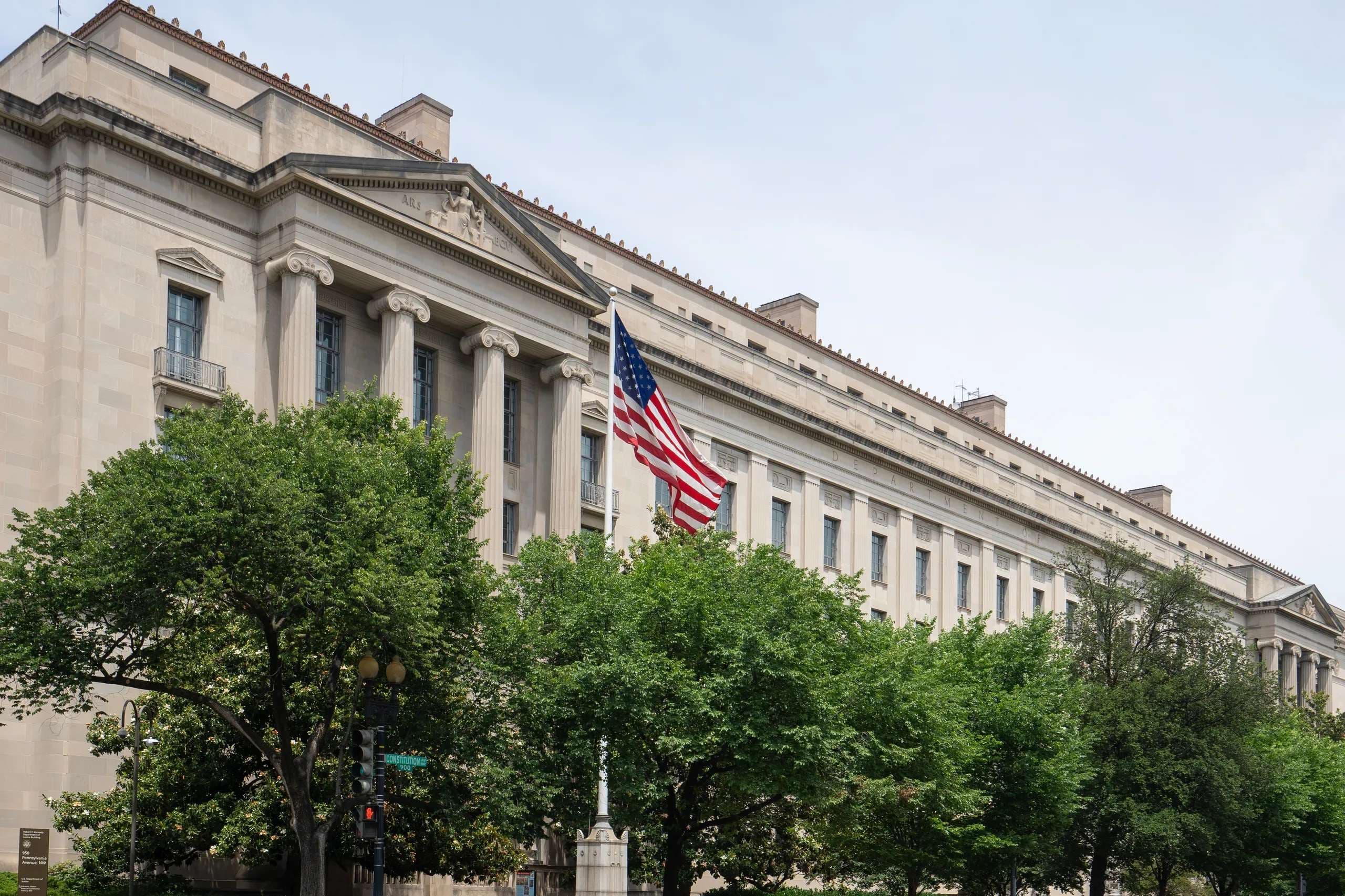
Senate Republicans, Democrats agree to separate, temporary DHS funding, avoiding shutdown
Republicans and Democrats reached a deal Jan. 29 to vote on a separate bill that will temporarily fund the Department of Homeland Security (DHS) for two weeks, allowing other funding bills to be voted through in order to avoid a government shutdown.

Republicans and Democrats reached a deal Jan. 29 to vote on a separate bill that will temporarily fund the Department of Homeland Security (DHS) for two weeks, allowing other funding bills to be voted through in order to avoid a government shutdown.
The news comes after Democrats and some Republicans indicated they would continue to block a six-bill funding package past its Jan. 30 deadline, precipitating a government shutdown. Their reason for blocking the package was its inclusion of a bill to fund DHS, which Democrats demanded be altered to include legislative language curtailing and adding oversight measures to DHS border enforcement operations after federal agents fatally shot two U.S. citizens in Minneapolis.
President Donald Trump touted the deal in a Jan. 29 post on Truth Social. “The only thing that can slow our Country down is another long and damaging Government Shutdown,” he wrote. “I am working hard with Congress to ensure that we are able to fully fund the Government, without delay.”
“Republicans and Democrats in Congress have come together to get the vast majority of the Government funded until September, while at the same time providing an extension to the Department of Homeland Security (including the very important Coast Guard, which we are expanding and rebuilding like never before),” he concluded. “Hopefully, both Republicans and Democrats will give a very much needed Bipartisan ‘YES’ Vote.”
Under the deal, lawmakers will move forward with five of the six annual appropriations bills originally grouped together in the government funding package, while approving a separate, two-week stopgap funding measure to keep DHS operating as negotiations continue over immigration enforcement policies, according to Senate Minority Leader Chuck Schumer, D-N.Y., and the White House.
“The separation of the five bipartisan bills the Democrats asked for, plus the two-week DHS continuing resolution, has been agreed to,” Schumer said in a statement.
A Senate test vote earlier Jan. 29 failed when Democrats and a small group of Republicans blocked the six-bill funding package that included DHS spending. Senate Republicans had pushed ahead with the package despite the opposition, but were forced back to negotiations after the vote fell short.
The temporary DHS funding extension, known as a continuing resolution, would keep the agency operating while also facilitating debate over proposed reforms of the agency. The remaining five spending bills include funding for the Pentagon and several other federal departments.
Senate Majority Leader John Thune, R-S.D., said Republicans were dissatisfied with sidelining the DHS bill but viewed the agreement as preferable to a shutdown.
“That’s the only way we’re going to get through this without a long government shutdown,” said Sen. Steve Daines, R-Mont.
Passage of the plan is not assured. Several Republican senators have raised objections to earmarks and other spending provisions, while Sen. Rand Paul of Kentucky has sought a vote on an amendment targeting refugee assistance funds.
The House must also approve the agreement, though lawmakers are not scheduled to return to Washington until next week. Some fiscal conservatives have already criticized the plan, raising questions about whether the deal can clear both chambers before current funding expires.
House Speaker Mike Johnson, R-La., said in comments to the Associated Press after the deal was announced that he would move “as quickly as possible” to support it, though he was “vehemently opposed” to breaking up the package. “We can’t have the government shut down,” he said.