Three American missionaries who died in Korea still inspire Knights of Columbus today
During the chaos of the Korean War, three US-born missionaries chose to remain with their people rather than seek safety.

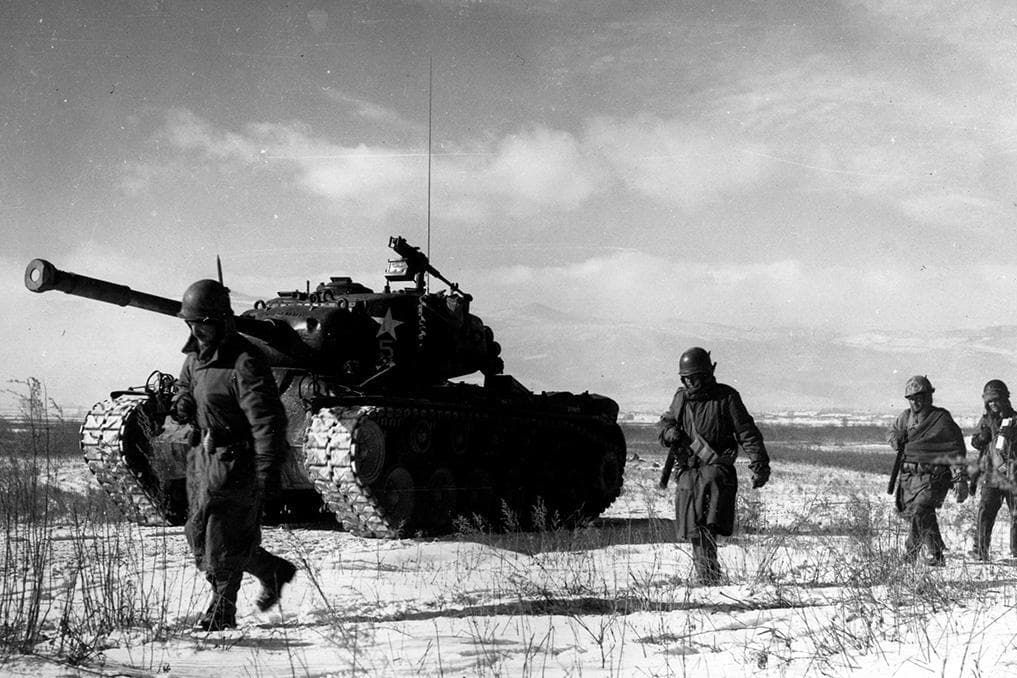
During the chaos of the Korean War, three US-born missionaries chose to remain with their people rather than seek safety. Their sacrifice continues to shape the witness of the Knights of Columbus in South Korea today.
Bishop Patrick J. Byrne, a Maryknoll missionary and the first apostolic delegate to Korea, was captured in Seoul in 1950. Ordered to denounce the Vatican, the US, and the United Nations (UN), he replied: “There remains only one course — that I die.” After a grueling death march, he succumbed to pneumonia at age 62, telling his companions shortly before his death: “After the privilege of my priesthood, I regard this privilege of having suffered for Christ with all of you as the greatest of my life.”
Monsignor Patrick Brennan, a member of the Missionary Society of St. Columban from Chicago and a decorated WWII chaplain, was arrested with two fellow priests in Gwangju. They were threatened with execution unless they revealed the names of their parishioners. They refused. When UN forces advanced, North Korean soldiers massacred hundreds of prisoners, including Msgr. Brennan.
Father James Maginn, another member of Missionary Society of St. Columban from Montana, also refused evacuation.
“I shall remain here and defend the Church until death,” he said. “I shall bear witness to God to the Communists who deny Jesus Christ.”
Captured in July 1950, he was tortured and executed after giving a final blessing to a fellow prisoner whom he had baptized.
For today’s Knights, these men are more than figures of the past. Korean Knights draw strength from their example of service and sacrifice, and American and Korean members recognize in them a shared spiritual heritage.
The shared legacy also inspires Maryknoll Father Gerard E. Hammond, a longtime Knight who prayed to Bishop Byrne for intercession before beginning his own mission in Korea in 1960.
“I prayed, frankly speaking, that I would be like him as best I could,” Fr. Hammond said.
Fr. Hammond has since made more than 60 visits to North Korea, bringing aid to the sick and bearing witness in silence.
“Someday, the Church will be flourishing in North Korea,” he affirmed. “There were moments when I sensed the hospital patients knew more than they could say. ‘Father, help me,’ they would say. And when they were cured, I would be asked to speak to them. I thought it was almost a contradiction, allowing a Catholic priest to speak to them in a public place. I said, ‘Go back to your villages, love your family, and always remember this.’”
Korean Knight Matthew Hong Sung-tae also draws inspiration from the US-born martyrs who died in the Korean war. His ancestor St. Paul Chŏng Ha-sang was martyred for the faith in 1839.
“During the Korean War, the North Korean military persecuted the Church because of our God-centered values,” Hong said. “But our shepherds would not yield, and the US-born martyrs’ refusal to evacuate was a testament to their profound service to the Korean people. The spirit of service — even willing to lay down one’s life — was exemplified by those who preceded us in this land of Korea.”
Territorial Deputy Shin Kyoung-soo, a retired major general of the Republic of Korea Army, spoke to the KofC about spiritual fellowship between American and Korean Knights, saying that their joint effort created “a strong synergy.”
“If we continue to go out and help the poor and suffering, I think that’s a way to spread the Catholic faith and to practice love, the greatest commandment of our Lord,” he said. “Just as the martyrs of Korea gave their lives for Christ, Knights are reminded to put faith into action, even when it requires perseverance and personal sacrifice, in service to God, the Church and our neighbor.”
Today, the Knights in South Korea continue to build on the foundation of the martyrs’ witness. They are active in longstanding pro-life initiatives, even as abortion remains in a legal gray area. They also support vulnerable migrant workers, responding to South Korea’s demographic challenges. With the country’s birth rate now the lowest in the world, immigration has become a defining feature of society.
Territorial Deputy Shin explains that Knights have invited Catholics from around the world — including the Philippines and France — to join their councils. Plans are underway for an international council in Seoul that will lead pro-life activities and provide stronger support for migrants.
Working closely with parish priests, the Knights are striving to establish a presence in all 16 dioceses of South Korea. Their evangelization efforts reflect the martyrs’ same spirit of perseverance. Last year, baptisms rose nearly 14% nationwide — a sign that, even in a culture facing secular pressures, the Church continues to grow.