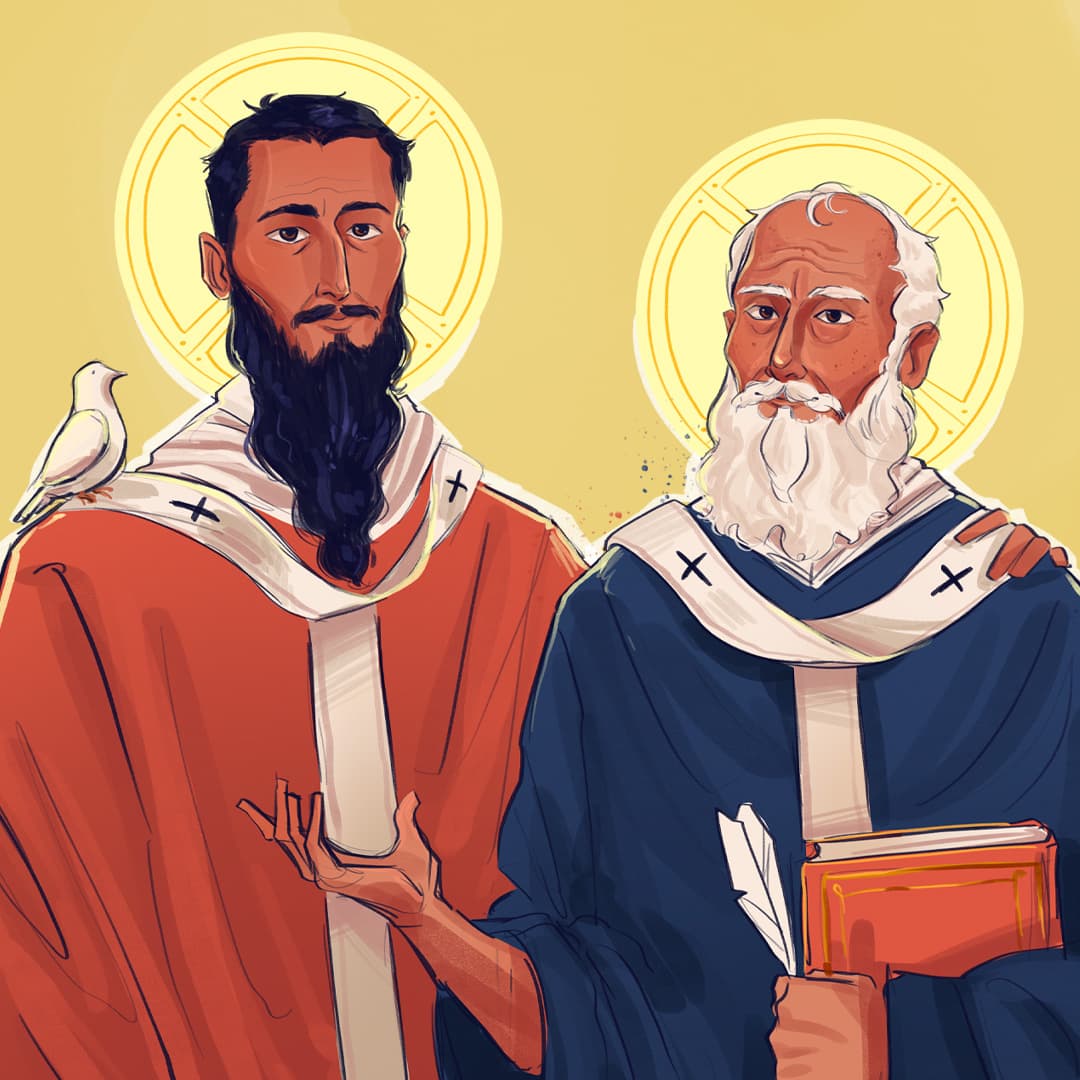
January 2 | Saint Basil the Great & Saint Gregory of Nazianzus
St. Basil
Born: 330 AD Caesarea of Cappadocia, modern-day Turkey
Died: 379 AD
Nationality: Born in the Roman empire, modern-day Turkish
Vocation: Bishop
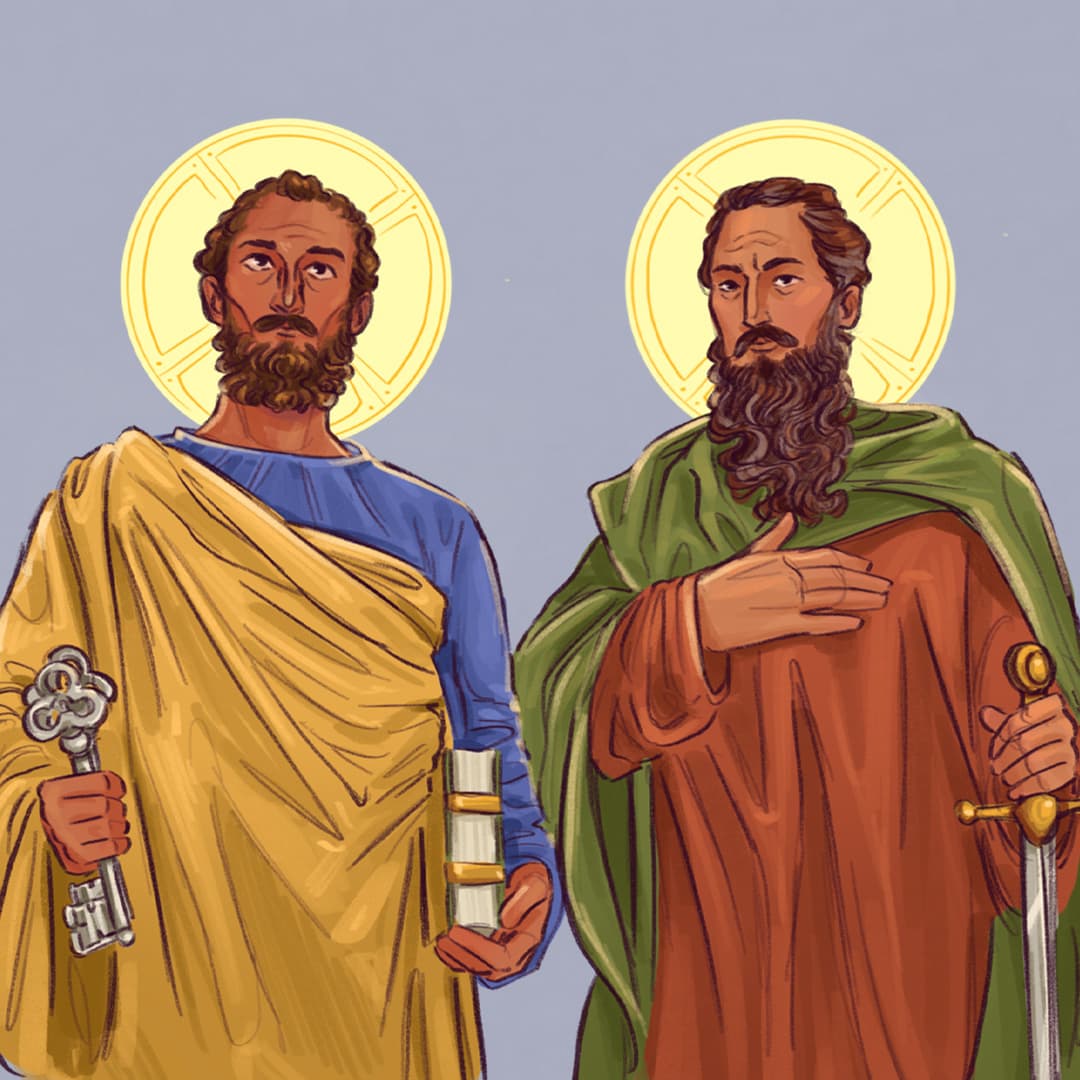
Attributes: bishops’ robes, book of the Gospels, the Holy spirit
Patronage: Hospital Administrators
Canonization: pre-congregation
St. Gregory
Born: around 325 AD Azarius, Asia Minor, modern-day Turkey
Died: 389 AD
Nationality: Lived in the Roman empire, modern-day Turkish
Vocation: Bishop
Attributes: Bishop’s robes, book of theology or the Gospels
Patronage: a good harvest, poets
Canonization: pre-congregation
Born to two saints, and one of 10 children, St. Basil was surrounded by holiness from a young age. He attended schools in Caesarea, Constantinople, and then Athens. It was in Athens that he met St. Gregory of Nazianzus, his friend, fellow saint, and the author of Basil’s biography.
After learning everything he could about theology, philosophy, and the other sciences, Basil worked as a professor, and then began to devote his life to spiritual things. He visited monasteries around the known world and then returned to found his own monastery in Pontus. There he wrote a rule of life for the monks, which became famous. So much so that he became known as the Father of Oriental Monasticism, the forerunner of St. Benedict. After founding several monasteries he was ordained the Bishop of Caesarea.
Gregory joined his friend’s religious order, being drawn to a life of aestheticism and simplicity.
Basil then asked Gregory to take an episcopacy in the small town of Sasmia. Having no desire to become a bishop, Gregory refused. Unfortunately the disagreement put a damper on their relationship which lasted till Basil’s death. Gregory then wrote his biography in which he described the man in glowing terms, so some peace must have been made between them.
Gregory later accepted the priestly ordination in Nazianzus helping his father and working to battle the Arian heresy raging in the Church at the time, which denied the divinity of Christ.
Emperor Valens, a strong supporter of the Arian cause, passed away giving hope to the Orthodox Christians. Gregory traveled to Constantinople to provide support for the Christians there. The city had become divided, and Gregory endured much hardship attempting to keep peace. He was soon named bishop of the city by the new emperor Theodosius, an anti-Arian who brought order.
Together with St. Athanasius, Basil and Gregory helped to establish the truth of the Church at the Council of Constantinople. Their greatest contribution was to the definition of the Trinity, and the consubstantial nature of the Father and the Son. Both worked in separate episcopacies, doing good wherever they happened to be.
During Basil’s episcopy he helped fight simony, provided relief for those suffering in a famine, did his best to reform the clergy, and excommunicated those involved in widespread prostitution trafficking in Cappadocia. He died in January 397, and is a Doctor of the Church.
Gregory preached to his new congregation about the nature of the Trinity and the dual nature of Christ. In his audience was a young man named Jerome, destined to become a Doctor of the Church as well. Gregory presided over the Council of Constantinople and soon retired as bishop. He lived a life of prayer and seclusion and wrote poetry. Sometimes called “the Theologian” Gregory is famous for his writings on the Trinity and the Holy Spirit.
Saints Basil and Gregory, pray for us.