Israel and Lebanon sign framework deal for partial withdrawal from southern Lebanon
Israel and Lebanon signed a framework agreement June 26 for a limited Israeli military withdrawal from southern Lebanon, closing out four days of U.S.-mediated negotiations at the State Department. The deal came as the fragile ceasefire between the U.S. and Iran came under strain after Iran attacked a commercial cargo ship in the Strait of Hormuz, prompting U.S. military strikes on Iranian targets and accusations from President Donald Trump that Tehran had broken the agreement.

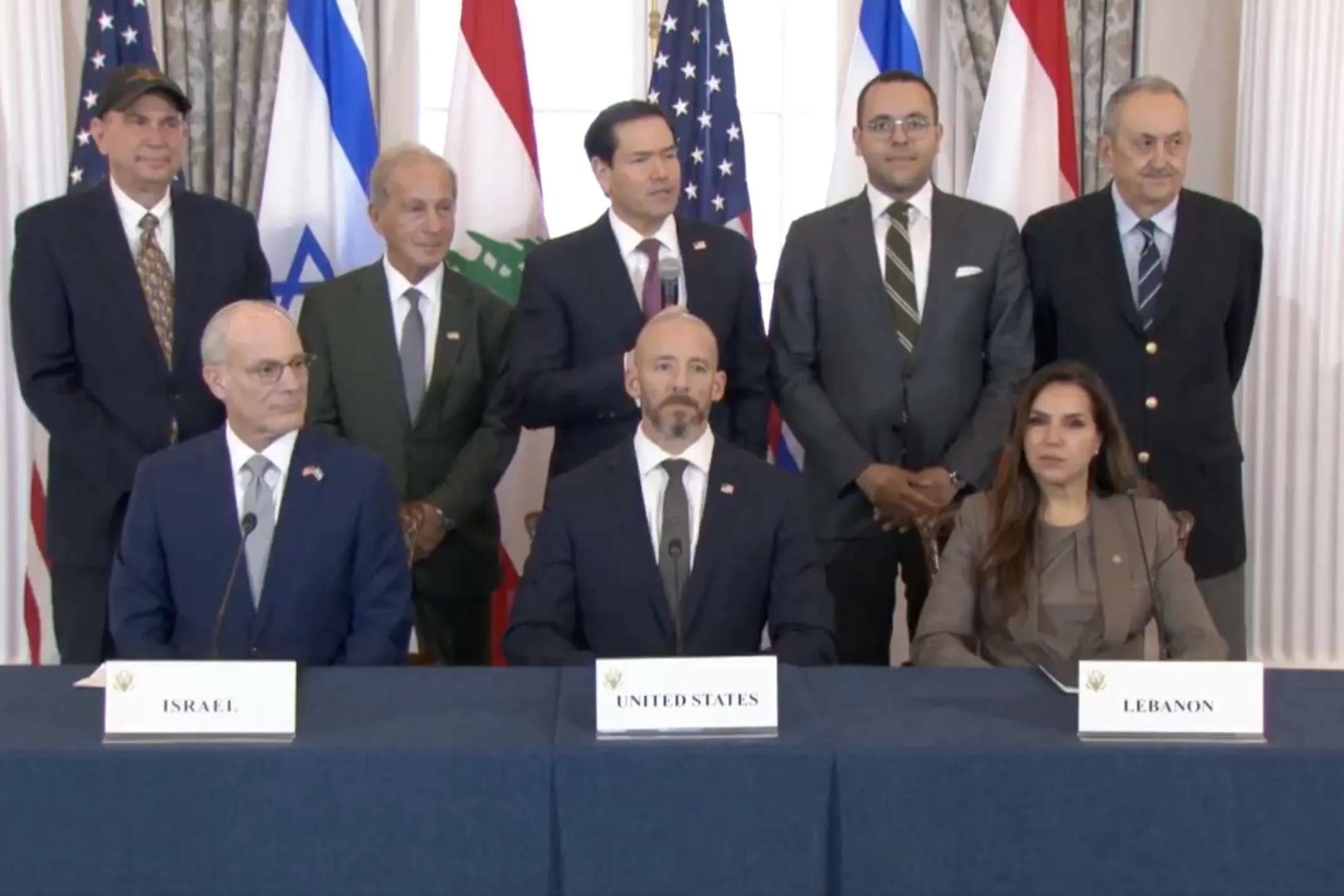
Israel and Lebanon signed a framework agreement June 26 for a limited Israeli military withdrawal from southern Lebanon, closing out four days of U.S.-mediated negotiations at the State Department. The deal came as the fragile ceasefire between the U.S. and Iran came under strain after Iran attacked a commercial cargo ship in the Strait of Hormuz, prompting U.S. military strikes on Iranian targets and accusations from President Donald Trump that Tehran had broken the agreement.
The agreement was signed by the Israeli and Lebanese ambassadors to Washington and by State Department Counselor Dan Holler. Secretary of State Marco Rubio, who joined the final round of talks June 26 after calling Israeli Prime Minister Benjamin Netanyahu and Lebanese President Joseph Aoun separately on June 25 to resolve remaining disagreements, said at the signing ceremony that "it is a good day" but stressed "there is a lot of work ahead."
Axios reported that in a written statement after the ceremony, Rubio said the agreement "establishes a clear and structured process to restore Lebanon's sovereignty, disarm Hizballah and dismantle its terrorist infrastructure, and enable Israel to return to its borders once that threat to its citizens is removed." He said the U.S. would provide $100 million in humanitarian assistance and additional funds to train Lebanese troops.
The Israeli ambassador said the final goal was "real peace" between Israel and Lebanon, calling the agreement "performance-based."
"Iran is out, Hezbollah is out, and the road to peace between Israel and Lebanon is in," he said.
The framework describes a path toward a future peace agreement and includes immediate steps on the ground. As first measures, it launches two "pilot projects" in which Israeli forces are to withdraw from small areas they currently occupy and Lebanese army troops are to deploy in their place, according to Axios. U.S. military officers will be involved in the pilot projects mainly to verify the areas contain no Hezbollah presence, Israeli and U.S. officials told Axios. Two Israeli officials said one area is north of the Litani River and the other is south of it.
A senior Israeli official said after the signing that "Israel will maintain its security zone within the borders of the Yellow Line in Lebanon until the day when Hezbollah and the other terrorist organizations in Lebanon are disarmed and there is no longer a threat from Lebanon to the territory of the State of Israel," according to Axios. The official added that Israel's "freedom of military action will be maintained throughout the security zone to eliminate threats of any kind."
Netanyahu, in a statement posted June 26, called the deal "a major achievement" and "a major blow to Iran," saying Tehran had been trying to pressure Israel into withdrawing.
"In effect, Israel, Lebanon, and the United States are telling them: this is none of your business," he said. "You have no role in Lebanon — not Iran, not Hezbollah, and not any terrorist organization."
Lebanon's president said the deal was a first step toward restoring the country's sovereignty, The Times of Israel reported.
However, a senior Hezbollah-affiliated lawmaker, Hassan Fadlallah, condemned the agreement and warned that Lebanese authorities would need to fight a "civil war" to enforce it — a sign that Hezbollah could potentially resist efforts by the Lebanese army to displace it from areas it controls, according to Axios.
>> US bishop highlights humanitarian crisis in Lebanon: ‘not their war, but they're the victims’ <<
The deal came during a fifth round of U.S.-mediated talks, which was extended past its originally scheduled endpoint of June 25 as both sides needed additional time to close gaps, according to a source familiar with the negotiations who spoke to the Times.
Both Israel and Lebanon entered the round frustrated at the Trump administration over its decision to sign a separate deal with Iran the previous week that included a ceasefire provision covering Lebanon, the source said. Israel and Lebanon argued that arrangement undercut the purpose of their direct bilateral talks, which the U.S. had established specifically to exclude Iran from influencing Lebanese affairs, the source said.
>> Trump, Iranian officials sign memorandum of understanding over Israeli objections <<
The U.S. move led Israel to harden its negotiating position, while Lebanon presented more expansive withdrawal maps than Israel was prepared to accept, the source told the Times. Political pressures on Netanyahu's government further limited what Israel would agree to, according to the source.
Axios reported that the partial withdrawal will be the first since Israel expanded its occupation of southern Lebanon during the war with Iran.
Trump says Iran violated ceasefire, strikes again
Separately, Trump posted June 26 on Truth Social that Iran had fired at least four "one way attack drones" at ships transiting the Strait of Hormuz. One drone "solidly hit the upper deck of a large and very expensive Cargo Carrying Ship," Trump said, adding that the vessel sustained damage but continued on its way and that three other drones were shot down. Trump called the action "a foolish violation of our Ceasefire Agreement."
In a statement, U.S. Central Command (CENTCOM) said U.S. forces launched strikes against Iranian missile and drone storage sites and coastal radar installations on June 26 in response to Iran's drone attack on the Singapore-flagged cargo ship M/V Ever Lovely the previous day. CENTCOM said the attack on commercial shipping "clearly violated the ceasefire" and said U.S. forces would continue providing security for vessels transiting the Strait of Hormuz.